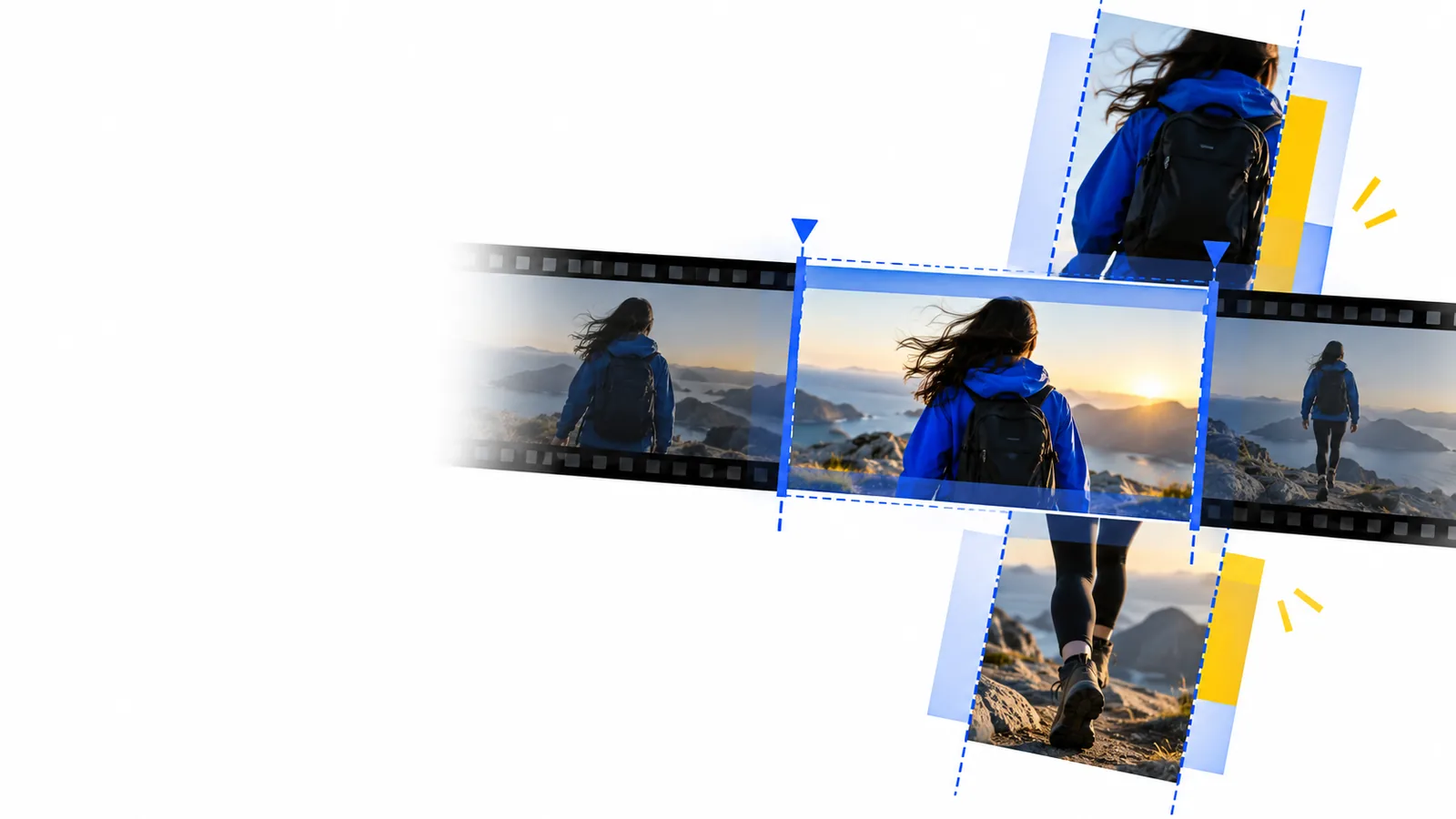
Manual editing

Choose a video editor no ai for hands-on decisions

A video editor no ai suits work where you choose the cuts, sequence, and sound yourself. Onlinevideo explains a manual workflow, but the linked product's available controls should be checked before you upload footage.

Check available controls after opening
Onlinevideo landing image

Pick the editing path that matches your goal

Manual editing starts with a decision about what you want to change, not a request for software to decide what matters.

Three decisions that keep an edit yours

Choose the material, set the pacing, and review the result. These examples show where an online video editor can fit without asking it to invent the story.

Interview editor

Select answers by listening for complete thoughts, then mark where each should begin and end.

A cut list that preserves the speaker's meaning instead of relying on an automatically chosen highlight.

online video editor tutorial for beginners


Short-form creator

Choose which recorded moments deserve emphasis before considering transitions or color treatments.

Effects remain a deliberate choice, not a substitute for a clear sequence.

free online video editor with effects

Event organizer

Arrange ceremony, speeches, and closing shots in the order that best represents the day.

The finished outline reflects the organizer's priorities rather than an inferred theme.

online video maker with photos

Team reviewer

Compare a colleague's proposed cuts against a version assembled with automated suggestions.

A clear record of which decisions need a person's approval before publication.

automatic video editor online free

Make a manual cut, step by step

The exact controls vary by product. Use this sequence as a plan for an online video editor, then confirm that the tool supports each action you need.

  1. 1

    Choose the source moments

    Watch your footage and note the start and end of each segment worth keeping. Write down the order before changing the timeline.

  2. 2

    Set cuts and audio deliberately

    Trim around complete actions or sentences. Listen across every join, especially where room tone or background sound changes.

  3. 3

    Review before exporting

    Watch the full sequence at normal speed. Check framing, abrupt cuts, captions if used, and the final seconds before accepting an export.

A cut should have a clear reason

Illustrative image associated with selecting a clip to trim Source clip
Illustrative image associated with a hands-on editing approach Chosen cut
These images illustrate an editing decision; they are not verified before-and-after output from the linked product.

Manual control and automatic suggestions

Manual workflow
AI-assisted workflow

Clip selection

Manual workflow

You identify the moments to keep.

AI-assisted workflow

Software may propose moments for review.

Sequence

Manual workflow

You decide the order of shots.

AI-assisted workflow

Software may suggest an order.

Pacing

Manual workflow

You set each cut by watching and listening.

AI-assisted workflow

Software may suggest cut points.

Captions

Manual workflow

You write or verify the wording yourself.

AI-assisted workflow

Generated text still needs checking.

Visual additions

Manual workflow

You choose whether to add any.

AI-assisted workflow

Suggested additions require approval.

Final review

Manual workflow

You check the whole export.

AI-assisted workflow

You still need to check the whole export.

Limits of a no-AI editing plan

Choosing a manual workflow does not prove that a particular online video editor disables AI, provides every timeline control, or accepts every source file.

The linked tool may include AI features

This page cannot certify an AI-free mode or describe how the linked product processes your footage.

Workaround

Read its current feature and privacy information before uploading, and avoid controls whose behavior you cannot verify.

Manual work takes review time

Selecting shots and checking audio yourself can take longer than accepting suggested cuts.

Workaround

Start with a short cut list and review one complete draft before fine-tuning.

Not every browser tool has the same controls

Precise trimming, audio adjustment, captions, and export options vary by service.

Workaround

Check the available controls and output settings against your project requirements first.

A clean cut cannot repair every source problem

Missing footage, severe camera shake, or clipped speech may remain noticeable after trimming.

Workaround

Use alternate recorded takes where possible, or revise the sequence around the usable material.

Take your cut list to the editor

Start with the decisions you have already made

Open the linked product with your source moments and intended sequence in mind. Check its controls and terms, then decide whether it suits your hands-on edit.

Open the editor
  • Know which moments to keep
  • Check how cuts and audio are controlled
  • Review the result before publishing

Questions about editing without AI

Some editing workflows let you choose clips and cuts yourself, but a manual workflow is not proof that the service has no AI features. Check the specific product's controls and privacy information before uploading.

Look for controls that let you select clips, set cut points, arrange shots, and review audio yourself. If avoiding AI processing is essential, confirm the service's current policy rather than relying on its editing interface alone.

It asks you to make more decisions, particularly about pacing and which moments matter. A short cut list and a full playback review make the work easier to manage.

Not automatically. Quality depends on the source footage, the choices you make, and how carefully you review the finished sequence.

Edit a video
Edit a video